
How to buy an off-market property on the Gold Coast
A large share of Gold Coast property changes hands without ever reaching a portal. Here's why so much stock stays hidden, the six routes buyers actually use to reach it, and the one thing that determines whether anyone calls you.
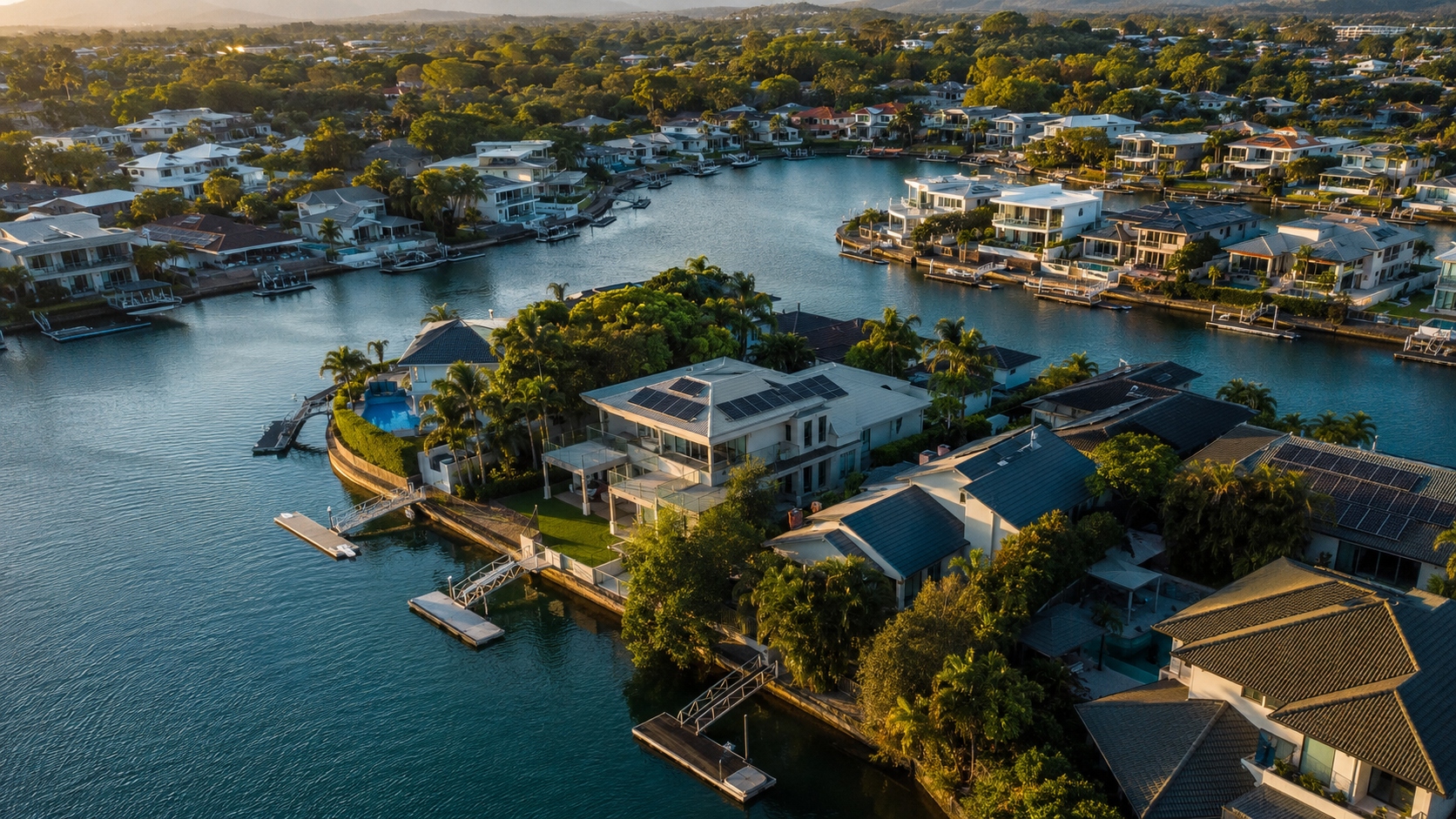
Every buyer on the Gold Coast eventually has the same conversation. You've had the alerts running for months. You know the stock in Palm Beach better than the agents do. Then someone at a barbecue mentions the place three doors down from them sold in autumn — four bedrooms, north-facing, exactly what you've been hunting — and it was never advertised anywhere. You never saw it. You were never going to see it.
That was an off-market sale. On the Gold Coast, there are a lot of them, and the buyers who consistently get access to them are not doing anything you couldn't do. They're just working the market from the other end.
What "off-market" actually means
An off-market property is one being sold without a public listing. No portal ad, no signboard, often no open home. The vendor is willing to sell, the price expectation exists, the property is real — it simply isn't advertised.
The term covers a wide spread of situations, and it's worth separating them, because they're reached in different ways:
- Pre-market — the property will be listed publicly, but hasn't been yet. There's a window of days or weeks where an agent shows it to buyers they already know.
- Quietly for sale — the vendor wants to sell but has instructed the agent to keep it discreet. It may never reach a portal at all.
- Persuadable — the owner isn't actively selling, but would move at the right number. This is the largest category by a wide margin, and the hardest to reach.
Most advice about buying off-market only addresses the first two. The third is where the real supply sits.
Why so much Gold Coast stock never gets advertised
Vendors don't withhold their homes from the market out of eccentricity. There are consistent, rational reasons, and understanding them tells you where to look.
Privacy, especially at the top end
On the tightly-held waterfront streets — Sovereign Islands, Isle of Capri, Cronin Island, the Hedges Avenue strip — a public listing means neighbours, dinner-party acquaintances and local competitors all learn what a vendor is asking and, eventually, what they accepted. Many prestige owners will simply not do that. They'd rather transact through one agent and three phone calls.
Testing price without burning the clock
Days-on-market is a number buyers use as a weapon. A vendor who lists at an ambitious figure and sits there for eleven weeks has handed every subsequent buyer a discount argument. Sounding out a price privately costs nothing and leaves no public record.
Life circumstances
Deceased estates, separations, business pressure, health. A public campaign with weekend opens is the last thing many of these vendors want, and their agents know it.
Tenanted investment stock
An owner selling a tenanted apartment in Southport or Labrador has to coordinate access, notices and inspections around someone else's home. A direct sale to a single interested buyer avoids all of it.
The downsizer's deadlock
This one matters more than any of the others, and it's the reason there is a permanent hidden layer of Gold Coast supply.
An enormous number of owners are in the same position: they will sell, but only once they know where they're going. They won't list until they've secured the next place, because they can't risk being homeless with a settlement date. So they wait. They watch the portals for their next home just like you do, and while they wait, their current home — the one you'd buy tomorrow — is invisible to the market.
Two properties that would each solve the other's problem, sitting three suburbs apart, and neither owner has any way of finding out the other exists.
This is the core inefficiency in residential property, and it isn't a supply problem. It's a matching problem.
Six ways to get in front of off-market Gold Coast property
Ranked roughly by effort-to-result, with the honest limitations of each.
1. Get onto agent buyer lists — and make yourself easy to call
Every established Gold Coast agent keeps a mental or actual list of buyers they ring before a listing goes live. Getting on it is free. Most buyers do it badly.
The mistake is being enthusiastic but vague. An agent with a pre-market four-bedder in Mermaid Waters is not ringing the buyer who was most excited. They're ringing the buyer whose requirements they can match in five seconds and who they believe will actually transact. "Anything nice around a million and a half" gets you nothing, because it gives the agent no way to recognise your property when it lands on their desk.
Be specific to the point of feeling restrictive. Suburbs, bed count, price band, finance position, timeframe — and critically, your absolute deal-breakers. An agent who knows you will not consider a high-rise, will not consider a body corporate above a certain figure, and needs dual living for a parent, can pattern-match instantly. That specificity is what earns the phone call.
2. Engage a buyer's agent
A good buyer's agent works, and it's worth being straight about why: they already hold the relationships described above, across dozens of agencies, and they're on those pre-market lists every week as a matter of business.
Expect to pay a percentage of the purchase price, commonly in the region of one and a half to three per cent, or a fixed engagement fee that on the Gold Coast typically runs from around eight thousand dollars upward depending on scope. On a $1.4 million purchase that's a meaningful sum, and whether it represents value depends entirely on how much time you have and how competitive your target segment is. For a time-poor interstate buyer chasing prestige waterfront, it often does. For a local buyer with flexibility and patience, it often doesn't.
The limitation worth naming: a buyer's agent expands your access to stock that agents control. It does far less for the persuadable category — the owner who isn't talking to any agent at all.
3. Approach owners directly
Pick the specific streets you actually want. Not the suburb — the streets. Then write to every owner in them. A short, plain, non-salesy letter explaining who you are, that you're buying not prospecting, what you're looking for and how to reach you.
The hit rate is low and you need to be prepared for that. But it reaches the persuadable layer that nothing else touches, and it costs postage. Buyers who do this in a disciplined way — a defined target area, repeated every few months rather than once — do land properties. Buyers who do it once and give up don't.
4. Research tenure
Title searches and property data services will tell you how long a given owner has held a property. Long tenure combined with life-stage signals is the closest thing to a lead list for the persuadable category. It's slow, it's a little clinical, and it works better in freestanding-house suburbs than in towers.
5. Work the adjacent professions
Strata and body corporate managers know which apartments are about to come up. So do local trades, particularly the ones doing pre-sale tidy-ups — a painter or landscaper often knows about a sale weeks before an agent is formally engaged. Mortgage brokers and conveyancers sit at the same intersection. None of this is a system, but it's how a surprising proportion of quiet deals actually surface.
6. Stop searching and make your demand visible
Every option above shares an assumption: that finding property is your job, and that you do it by looking harder.
Consider the arithmetic of that. There are hundreds of active agents across the Gold Coast, thousands of owners in your target suburbs, and one of you. The stock you most want is private by design. You are trying to out-search a market that has deliberately hidden the thing you're searching for.
The alternative is to invert it. Instead of you hunting stock, publish exactly what you want — in enough detail to be actionable — and let the people who hold matching property come to you. The agent with a pre-market listing, the owner in the downsizer's deadlock, the investor thinking about exiting: none of them have to be found. They have to be given somewhere to look.
This is what byr.realestate does. Buyers post a structured brief — suburbs, budget, must-haves, deal-breakers, finance position, timeframe — and it becomes visible to agents, owners and sellers on the Gold Coast, who reply directly. Posting a brief is free for buyers. You are not searching listings; you are the listing.
What makes a buyer worth contacting
Whichever route you take, the same thing determines your results, so it's worth stating plainly. Off-market access is a function of how legible you are, not how motivated you are.
Compare two buyers.
The first: "Looking on the Gold Coast, up to about $1.5 million, keen to move soon."
The second: "Budds Beach or Bundall. Two bedrooms minimum, open to more. $1 million to $1.5 million. Cash buyer, no finance clause. Ready in one to three months. Need dual living for a parent. Absolutely not a high-rise."
The first is a name in a database. The second is a phone call an agent can make this afternoon with a specific property in mind, and a decision the vendor can make on the spot. Same budget, same suburb, completely different outcome.
The deal-breakers do more work here than anything else. Buyers tend to leave them out, worried about narrowing their options. In practice they're the single most useful thing you can supply, because they let the other side rule properties in and out without wasting a conversation — which is precisely why they get you more conversations, not fewer.
What to do this week
- Write your brief down properly. Suburbs, not the coast. Bed and bath minimums. A real price band. Your finance position, stated honestly. Your timeframe. Three must-haves. Three absolute deal-breakers.
- Get your finance sorted before you need it. Off-market sales move fast and often hinge on certainty rather than price. Pre-approval is the difference between being considered and being remembered.
- Pick your streets. Narrow to the specific pockets you'd genuinely buy in, and be willing to say no to everything else.
- Contact the agents who dominate those streets. Send them the written brief, not a vague expression of interest.
- Make your demand public. Post your brief on byr.realestate so that owners and agents with matching property can find you instead of the other way around.
The Gold Coast property you want probably exists right now, owned by someone who would sell it to you. The reason you haven't seen it isn't that it's unavailable. It's that nobody has told them you're looking.
Looking to buy?
Post what you want and let agents, owners and off market sellers come to you. Free for buyers.
Post a brief